10 Signs Your Roof Won't Survive Winter
Home Improvement, Roof Maintenance
10 Warning Signs Your Roof Won’t Survive Next Winter
Winter is when your roof works the hardest. Spotting problems now can save you from leaks, stress, and costly emergency repairs when temperatures drop. Here are ten clear warning signs your roof might not make it through the next cold season.
1. Missing, Cracked, or Curling Shingles
Shingles are your roof’s first line of defense. If you notice shingles that are curled at the edges, cracked, broken, or missing altogether, your roof is already vulnerable. Snow and ice can easily work their way underneath damaged shingles, leading to leaks and rot. From the ground, look for uneven patches, exposed underlayment, or areas that appear rough and lifted instead of flat and uniform.
2. Granules Collecting in Gutters or at Downspouts
Asphalt shingles are coated with tiny protective granules. Over time, these granules wear off, leaving shingles thin and brittle. If you see dark, sand-like material in your gutters, on your driveway beneath downspouts, or on your deck, it means your shingles are aging fast. A roof that has lost a lot of granules will struggle against heavy snow loads, freeze-thaw cycles, and harsh winter winds.
3. Sagging Areas on the Roofline
A healthy roof should look straight and even. If parts of your roof look sunken, wavy, or dipped, that’s a serious red flag. Sagging can signal long-term moisture damage, weakened decking, or structural issues in the rafters. Add the weight of heavy snow, and a sagging roof can quickly turn into a safety hazard. This is one sign that should never be ignored or delayed until spring.
4. Water Stains or Peeling Paint Indoors
Your ceilings and upper walls often tell the truth about your roof. Look for yellow or brown water rings, peeling paint, bubbling drywall, or musty odors on upper floors. These signs usually mean water is getting past your roofing system and into your home. Winter ice and melting snow will only make existing leaks worse, potentially damaging insulation, wiring, and interior finishes.
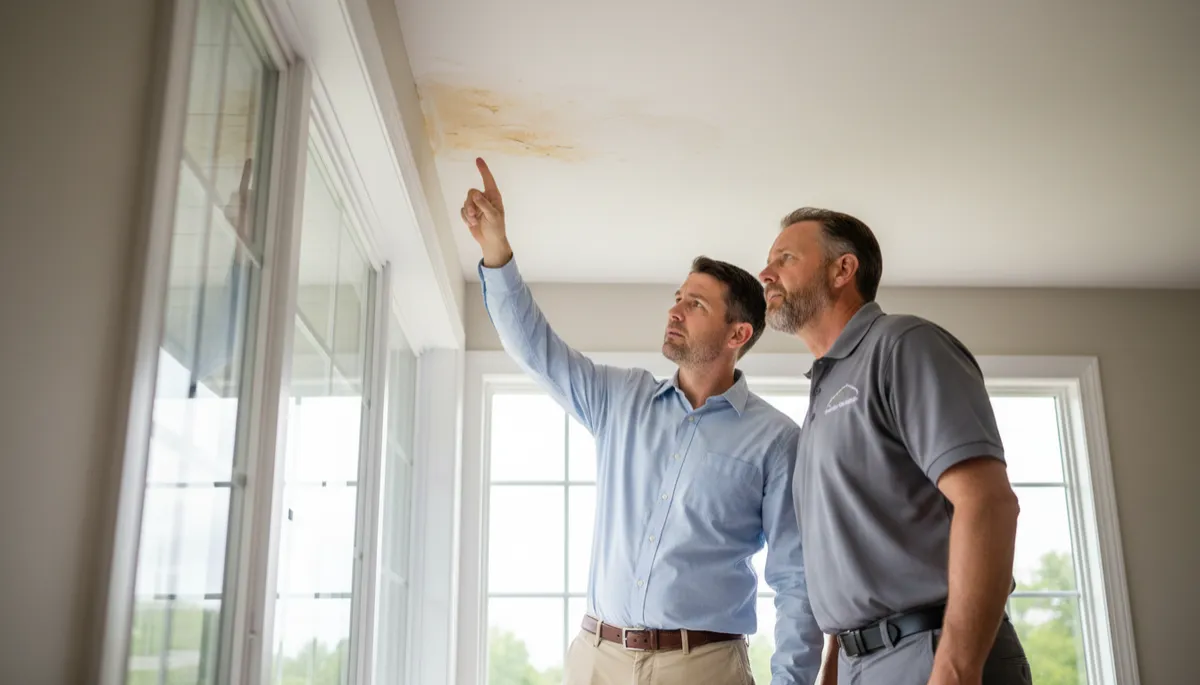
Interior stains are often the first visible clue your roof is already leaking.
5. Daylight Visible in the Attic
Take a flashlight into your attic on a bright day and turn the light off for a moment. If you can see beams of daylight coming through the roof boards, there are gaps where cold air, water, and pests can enter. In winter, those same gaps can allow warm air from your home to escape, driving up heating costs and increasing the risk of ice dams forming along your eaves.
6. Mold, Mildew, or a Musty Smell in the Attic
Your attic should be dry and well-ventilated. If you notice dark spots on wood, fuzzy mold growth, damp insulation, or a persistent musty odor, moisture is building up where it shouldn’t. This can be caused by small roof leaks, poor ventilation, or both. Once temperatures drop, trapped moisture can freeze and thaw, worsening damage to your roof structure and insulation throughout the winter months.
7. Rusted or Damaged Flashing Around Chimneys and Vents
Flashing is the thin metal installed around chimneys, skylights, vents, and valleys to keep water out. If your flashing looks rusted, bent, cracked, or pulled away from the roof surface, water can easily seep in. Snow often piles up around these areas, and melting runoff will find any weak spot. Replacing or repairing flashing before winter is far cheaper than repairing interior water damage later.
8. Frequent Ice Dams or Heavy Icicle Build-Up
Think back to last winter. Did you have thick ridges of ice along the roof edge or large icicles hanging from your gutters? Ice dams form when heat escapes through the roof, melting snow that then refreezes at the colder eaves. This is often a sign of poor insulation, inadequate ventilation, or an aging roof system. Ice dams can force water backward under shingles, causing leaks even if your roof looks fine from the outside.
9. Old Age and Past Patchwork Repairs
Most asphalt shingle roofs last around 20–25 years under normal conditions. If your roof is approaching or past that age, or if it has a history of repeated patch jobs, it may not stand up to another harsh winter. Multiple layers of shingles, mismatched repairs, or obvious patchwork can hide deeper issues. At a certain point, a full replacement is safer and more cost-effective than constant spot fixes.
10. Rising Energy Bills and Drafty Upstairs Rooms
A failing roof doesn’t just leak water; it can also leak heat. If your heating bills have climbed without explanation or your upstairs rooms feel noticeably colder or draftier than the rest of the house, your roof and attic may be to blame. Poor insulation, air leaks, and hidden moisture issues all reduce your home’s efficiency, making winter comfort more expensive and less reliable.
Don’t Wait for the First Snowfall
If you recognize one or more of these warning signs, the safest move is to schedule a professional roof inspection before winter arrives. A qualified roofer can pinpoint hidden damage, recommend repairs or replacement, and help you prioritize what needs attention now versus what can wait. Acting early protects your home, your budget, and your peace of mind when the snow and ice finally set in.